🎧 Gear — receivers for lossless playback
Choosing wired earphones for speed listening
Preparing lossless WAV is not enough if the last link — the thing in your ears — stretches the signal. Speed algorithms rely on the timing and phase integrity of the original, so a diaphragm that stops late or a housing that resonates blurs the boundary between consonants and vowels. Then the brain starts filling gaps again. That is why the receiver is a learning-efficiency question.

🧠First — the three kinds of cognitive load
In Sweller’s cognitive load theory and the cognitive spare capacity model, working memory is a limited resource, and the total is spent across these three.
- IntrinsicThe inherent difficulty of the material — integrating context and vocabulary in real time at speed. This cannot, and should not, be reduced.
- Extraneous ⚠️Effort wasted on flaws in the delivery medium. When compression, wireless degradation or receiver distortion mangles the sound, the brain spends resources filling in the gaps. This is the part to eliminate.
- GermaneThe useful work of elaborating material into long-term memory. Whatever you save on extraneous load comes back here — where learning actually happens.
📊 The picture — where the same 100% goes (illustrative)
① Lossy source over wireless: intrinsic 30% · extraneous 55% · germane 15% — working memory is taken up reconstructing sound, leaving little room for long-term encoding. ② Lossless WAV over a precise wired path: intrinsic 30% · extraneous 5% · germane 65% — the distortion you bypassed becomes capacity for understanding and memory. (These figures are illustrative; real values vary by person, task and setting.)
⚙️Why wired and well-damped — transients and phase
Time-scale modification (TSM) assumes the phase of the waveform stays coherent. If the diaphragm stops later than the signal changes, or the housing rings along, you get transient softening — the tail of each sound rounds off and consonant boundaries blur. Add wireless re-compression on top and the distortions stack. Hence a wired connection and a well-damped driver.
🔌Before you buy — can you just plug it into your phone?
Most phones no longer have the round 3.5 mm hole, so earphones fall into two groups. ① USB-C earphones contain the device that makes sound (a DAC) inside, so you plug them into the phone’s USB-C port and you are done. ② 3.5 mm and 4.4 mm earphones use the older connector and will not fit a modern phone directly; you need a “USB-C DAC dongle”, a finger-sized converter, in between. Of the five below, three plug straight in (two USB-C, one Lightning) and two need a dongle. The DUNU Alpha 3 comes in a 3.5 mm and a 4.4 mm balanced version; pick the balanced one and the dongle must have a balanced output too.
🎧Five picks by situation
Rather than “which is best”, ask which suits how you train. Each card links to the official page, a shop and a video.
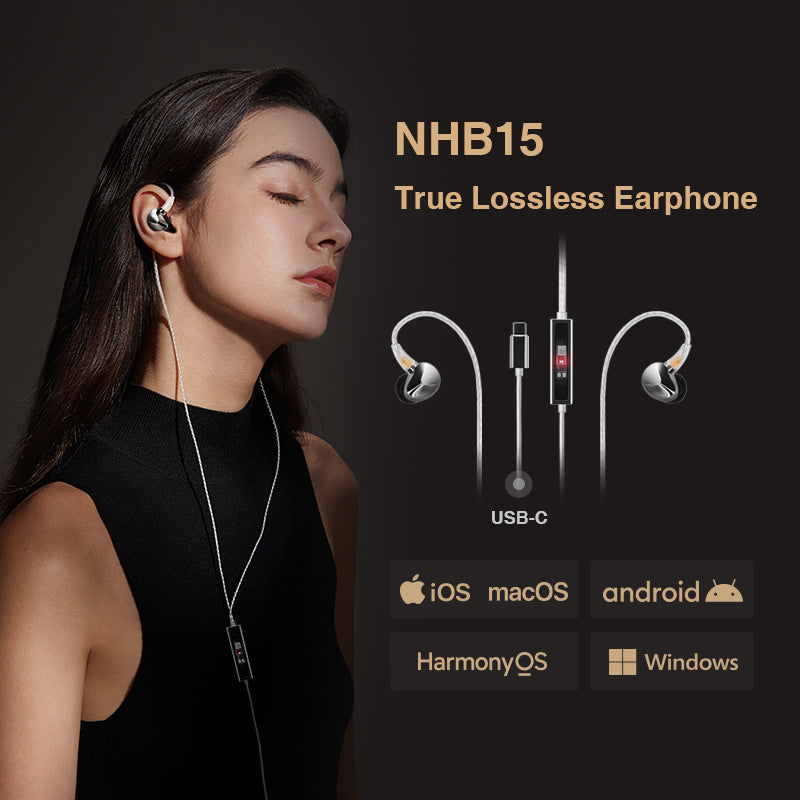 🏆 Precision on the moveQuestyle NHB15🔌 USB-C direct ✅ — plugs straight into the phone (DAC and amp built in)₩440,000 on Coupang (import listing, checked 2026-09-07) · $349 officialA small amplifier sits in the cable itself. It drives and stops the diaphragm firmly, so even at 4× consonants stay crisply separated. Plugs straight into a phone, which suits training on the move. The most expensive of the picks here.Coupang ₩440,000 ↗Official store $349 ↗Video review ↗
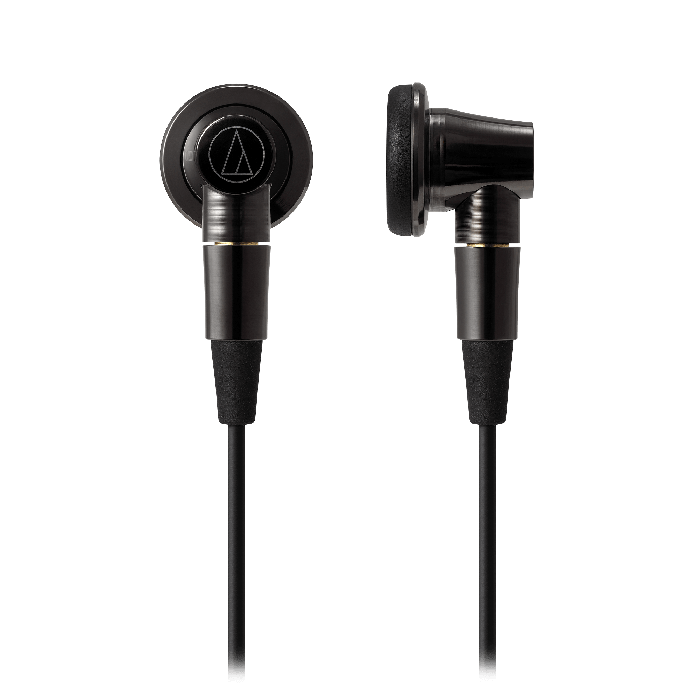 👑 Long sessions at homeAudio-Technica ATH-CM2000Ti⚠️ 3.5 mm / 4.4 mm — modern phones need a USB-C DAC dongle₩390,000 on Coupang (import listing, checked 2026-09-07) · titanium housingAn open design that does not seal the ear, so two or three hours of listening feels far less stuffy and tiring. Suited to long sessions in a quiet room. The connector is the older type, so budget for a USB-C dongle alongside it. Prices vary widely by seller — another Coupang listing for the same model was ₩596,800 the same day — so check the model number ATH-CM2000TI and compare.Coupang ₩390,000 ↗Search Coupang again ↗Official page ↗Video search ↗
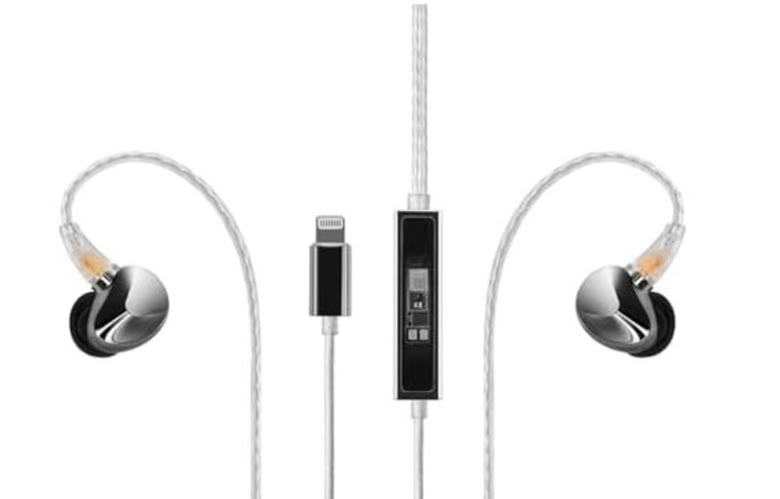 🍎 iPhone (Lightning)Questyle NHB12🍎 Lightning direct ✅ — plugs straight into an iPhone (Apple MFi certified, amp built in)₩224,300 on Coupang (list ₩280,300, −19%) · $99 on Amazon (checked 2026-09-07)The iPhone version of the NHB15 above, with the same in-cable amplifier, so consonants hold up as you raise the speed. Being Apple MFi certified it takes Apple Music's 24-bit/192kHz lossless (ALAC) straight through — nothing re-compresses on the way. A 3.5 mm cable is in the box too, since the cable is interchangeable. Lightning means iPhone 14 and earlier; iPhone 15 and later are USB-C, in which case the NHB15 above is the one. In Korea, Coupang is the practical place to buy it; Amazon is much cheaper at $99 but awkward to order from here, so it is listed for reference.Coupang ↗Amazon $99 (reference) ↗Official video ↗
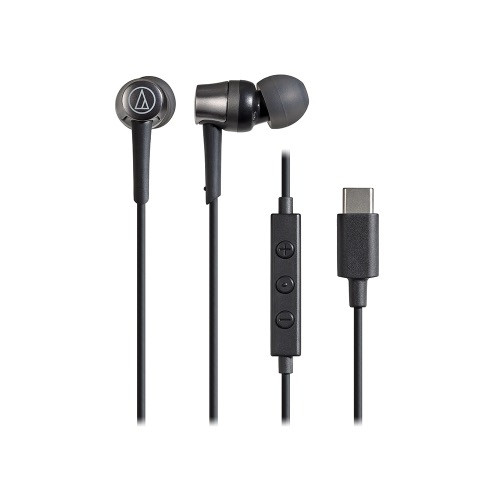 🥉 Starting lightAudio-Technica ATH-CKD3C🔌 USB-C direct ✅ — plugs straight into the phone (DAC built in)KRW 39,000 list · 9.8 mm driverBudget-priced, yet it puts a weighty brass stabiliser behind the driver to damp vibration — so sibilance cracks and splits less. It plugs straight into a phone, making it the easiest way to try lossless speed listening without a big outlay.Official page ↗Buy on Coupang ↗Video comparison ↗
🎯 Source and receiver are one set
Even with 48 kHz WAV, if the receiver stretches the signal or Bluetooth re-compresses it, the brain ends up spending resources on reconstruction anyway. Long sessions in a quiet room: CM2000Ti. The same open sound for less: DUNU Alpha 3. Precise training on the move: NHB15. Minimum budget, straight into the phone: CKD3C. Choosing the receiver that fits your setting is the last piece that completes lossless speed listening.
Source
Compiled from public literature on cognitive load theory (Sweller), cognitive spare capacity and time-scale modification, together with manufacturer specifications and audio reviews. Specifications and prices vary by model and over time — check official specs before buying. No brand affiliation. Product images are quoted from the manufacturers and official distributors (Questyle, Audio-Technica, DUNU, Segi AT) for product identification; copyright remains with each company.
※ This article summarizes and restructures the key points of the source above.